 ®
®"You Only Worry About Me When It's Convenient": Ableism as a Weapon
When a diagnosis gets repurposed as a standing objection to everything you say, deployed exactly when you name a real grievance and shelved when it would require something from the other person, it is functioning as a weapon.
"You Only Worry About Me When It's Convenient": Ableism as a Weapon
A client tells me about the moment she realized her diagnosis had stopped being hers. It took her nearly fifteen years and a rotating cast of providers to get an accurate one in the first place: mislabeled first with anxiety, then bipolar II, then borderline personality disorder, medicated for each in turn, none of it ever quite fitting, until a clinician finally looked past the surface-level overlap and identified AuDHD. Along the way, more than one provider treated her confusion about why nothing was working as further evidence of the label already in her chart, rather than a reasonable question about whether the chart was wrong. She was talked over and occasionally spoken to like a child in her own appointments, which only reinforced the very pattern she'd grown up inside. In the years before that, her family of origin had a well-worn script for her: talked over in family decisions and gently steered away from any responsibility that mattered. Infantilized, in other words, under the cover of concern.
What she noticed, once she finally had language for her own diagnosis, was the pattern in when that "concern" surfaced. It wasn't there on ordinary days. It arrived, with almost mechanical precision, exactly when she raised a real grievance: when she named a boundary that had been crossed or simply said a true thing the family had agreed not to say out loud. That was when she'd suddenly hear that she seemed unstable again and that her judgment couldn't quite be trusted right now. The concern was a switch the family knew how to flip whenever she got too close to naming what was wrong. In that system she was the only one willing to say the thing everyone else had agreed to carry in silence: the family's identified patient, its sin eater, handed the diagnosis precisely because she was the one who wouldn't stop pointing at what the diagnosis was covering for.
She'd disclosed her diagnosis to her family two years earlier, hoping for understanding. Instead, she started noticing it come up in conversations she wasn't part of: a sibling mentioning it to a mutual friend during an unrelated disagreement, a cousin referencing it, unprompted, when she raised a legitimate concern about how she'd been treated at a family event. Neither she nor the diagnosis had changed. What had changed was that everyone around her now had a ready-made explanation for dismissing anything she said, and it worked on people who didn't even know what the diagnosis meant.
This is one of the more corrosive patterns in family systems and relationships involving a neurodivergent or mentally ill member: the diagnosis itself gets repurposed as a weapon, used to make everyone around them stop listening.
The quick version:
- A real diagnostic term, diagnostic overshadowing, describes clinicians attributing new symptoms to an existing diagnosis instead of investigating them. The same mechanism gets weaponized socially: any complaint from a diagnosed person gets waved away as "just their [diagnosis]."
- DARVO (Deny, Attack, Reverse Victim and Offender) frequently uses a target's diagnosis as the "Attack," discrediting them preemptively so their account of harm never gets a fair hearing.
- Sanism, a term from disability law, names the systemic bias against people with psychiatric or neurodevelopmental diagnoses that makes this tactic so reliably effective. It works because the bias was already there, waiting to be activated.
- AuDHD-specific traits (meltdowns, direct communication, memory differences, alexithymia) get pointed to as "proof" of unreliability, when they're neurological differences that say nothing about honesty.
- This tactic isolates by design. Once a community believes the diagnosed person is "unstable," their entire support network becomes recruitable against them.
Diagnostic Overshadowing, Extended Past the Clinic
Diagnostic overshadowing is an established clinical term describing a specific, well-documented failure in healthcare: when a patient with an existing psychiatric or developmental diagnosis reports a new symptom (physical pain or a medication side effect) and the provider attributes it to the existing diagnosis instead of investigating it on its own terms. It's a major contributor to the significantly shortened life expectancy of people with serious mental illness, because real, treatable physical conditions get waved away as "just anxiety" or "just part of their disorder" until it's too late to catch them early.
The mechanism doesn't stay inside medical settings. The same shortcut (this person has a diagnosis, therefore this new information from them can be explained by the diagnosis rather than taken at face value) gets used constantly in families and workplaces, and it's just as damaging outside a clinic as inside one. A person reports that someone hurt them, and the response is a diagnosis, cited as if it were an explanation. He's on the spectrum, he misreads things. She has BPD, this is what they do. The complaint gets absorbed into a pre-existing narrative and dismissed before anyone looks at what happened.
DARVO, and the Diagnosis as the Attack
Psychologist Jennifer Freyd coined DARVO in 1997 to describe a specific, recognizable sequence: an abuser, confronted with their behavior, Denies it happened, Attacks the credibility of the person confronting them, and Reverses the roles of Victim and Offender so that the abuser ends up occupying the sympathetic position while the actual victim is recast as the unstable or untrustworthy one.
A target's diagnosis is one of the most efficient tools available for the Attack phase, precisely because it doesn't require fabricating anything. The diagnosis is real. The abuser only needs to reframe a real diagnosis as proof of unreliability, and let existing stigma do the rest of the work for them. "You can't trust what she says, she has [diagnosis]" is a sentence that requires no evidence and reliably ends the conversation before the actual allegation gets examined. It's Attack and Reverse accomplished in a single clause.
Sanism: Why This Tactic Works So Reliably
Legal scholar Michael Perlin coined the term sanism to describe systemic discrimination against people with psychiatric disabilities, a bias operating the same way racism or sexism does, baked so deeply into institutions and everyday assumption that it rarely gets named, let alone challenged. Sanism is the reason DARVO's diagnosis-as-attack move works as efficiently as it does. The abuser doesn't have to build the bias against the diagnosed person's credibility from scratch; it's already sitting in the courtroom and the family group chat, waiting to be pointed at someone.
This is why family court and even casual social conflicts so often tilt against the person with a disclosed diagnosis, regardless of the merits of what they're reporting. Nobody has to argue that the diagnosis makes them unreliable. The culture has already agreed to that premise long before the specific conflict ever started.
Why AuDHD Traits Make This Especially Effective
Autistic and ADHD traits provide a particularly rich set of surface material for this tactic, because several of them can be made to look, out of context, exactly like the "proof" an accuser is looking for.
A meltdown, triggered by prolonged mistreatment, can be pointed to afterward as evidence that the person is "the unstable one," with the mistreatment that caused it conveniently left out of the retelling. Direct, unfiltered communication, a common autistic trait, gets recast as aggression or instability. Differences in memory and recall (a well-documented feature of ADHD and autism, particularly under stress) get used to suggest the person's account of events can't be trusted, rather than being understood as a cognitive difference that has nothing to do with honesty. Alexithymia, difficulty identifying and naming one's own emotional state in real time, can be twisted into "see, they don't even know what they're feeling, how could they know what happened." Each of these is a real neurological trait that says nothing about honesty, but each one hands an abuser a plausible-sounding, stigma-compatible detail to build the Attack phase around.
The Isolation Is the Point
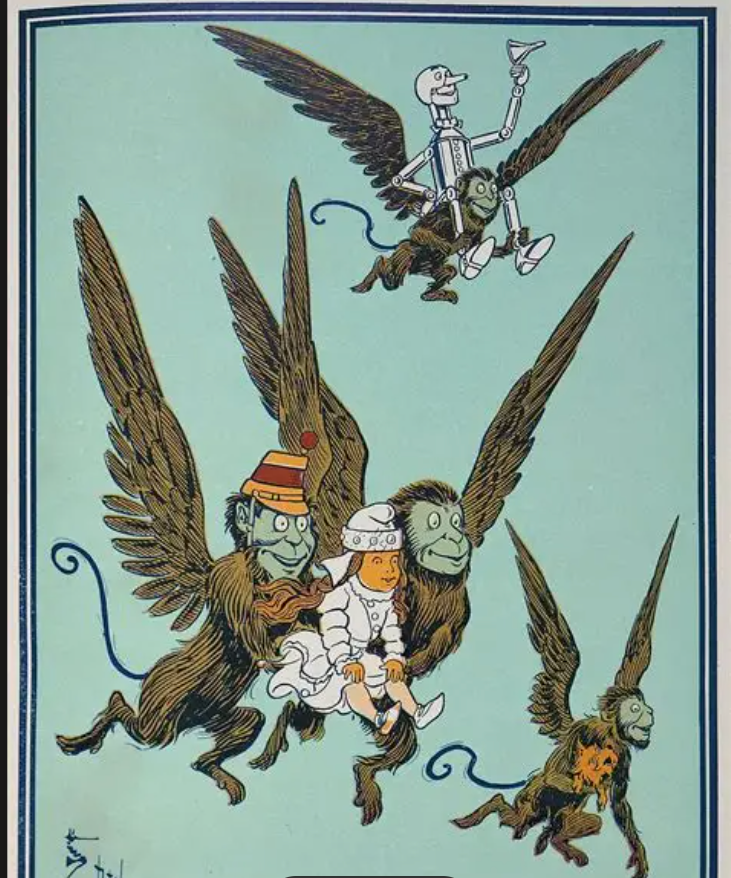
This tactic rarely stops at damaging one relationship. Its real function is usually broader: recruiting the target's entire support network against them before the target has any chance to tell their own side. This overlaps directly with the "flying monkeys" pattern in coordinated harm: friends and family members who absorb the diagnosis-as-proof narrative secondhand, often in good faith, without ever hearing directly from the person being discussed. Once enough of a person's community has been primed to see them as unstable, the person loses the presumption of credibility everywhere else in their life at the same time, which is precisely what makes this pattern so effective at producing isolation as well as conflict.
What This Means Clinically
A few things follow from naming this pattern directly with clients who are living inside it.
The diagnosis itself is not the problem, and clients need to hear that stated plainly and often. Sanism created the credibility gap, and someone else chose to exploit it. Conflating the two (internalizing "my diagnosis makes me unreliable" instead of recognizing "someone used stigma against my diagnosis as a weapon") is exactly the outcome the tactic is designed to produce, and undoing that conflation is often a meaningful chunk of the clinical work.
Clinicians also have to be vigilant about not participating in this dynamic themselves. A provider who hears "well, they have autism, so they probably misread the situation" and accepts that framing without assessing what happened is doing diagnostic overshadowing in real time, in the room, with real consequences for the client in front of them.
Documentation and outside validation matter more for this population, precisely because the informal social systems that usually help people sort out interpersonal conflict (mutual friends comparing notes, family members forming their own independent read of a situation) are exactly the systems most vulnerable to being recruited by the Attack phase before they ever hear a neutral account. Encouraging clients to keep their own record of events, and to seek assessment or legal consultation from people with no stake in the existing narrative, is a reasonable response to a tactic that specifically targets informal credibility.
What the client from the opening of this piece needed was someone to say, clearly, that the diagnosis was never the problem: what she was describing was other people finding a stigma-shaped tool lying on the ground and deciding to pick it up.
The client described in this piece is an illustrative composite, not an account of any specific individual. This article is for educational purposes only and is not a diagnostic tool.
If you're recognizing this pattern in your own life, that recognition is worth bringing to a licensed clinician or, where appropriate, an attorney, not something to face alone, and not a reason to self-diagnose or diagnose someone else from an article. If what you're experiencing includes abuse, coercive control, or coordinated harassment, the National Domestic Violence Hotline is available 24/7 at 1-800-799-7233, by text (START to 88788), or by chat at thehotline.org.
© 2026 Love Psychotherapy, LLC. All rights reserved. Love Psychotherapy® and the Love Psychotherapy heart logo are registered trademarks of Love Psychotherapy, LLC.
Explore Topics
Written by
Mx. Love C. Dialogos, LMFT
Mx. Love C. Dialogos, LMFT, is a licensed marriage and family therapist and Buddhist chaplain practicing by telehealth in 13 states. Their clinical writing has appeared in Psychotherapy Networker.
© 2026 Love Psychotherapy, LLC. All rights reserved. Love Psychotherapy® is a registered trademark.