 ®
®
Love Psychotherapy
You are not broken.
You are a person embedded in a web of genetics, history, environment, and relationship: and something in that web has been asking for attention longer than anyone around you has been willing to name.
Therapy here is humanistic, person-centered, and grounded in Buddhist psychology: a practical, evidence-informed lens for understanding your own mind. I work with individuals across 13 states, exclusively via telehealth.

How I work
You decide the content of our sessions.
I'm humanistic and person-centered in my approach. I believe you are doing the very best you can with what you have, and that you've come to this point because you need an additional perspective on a situation you're already working hard on.
Therapy is not forever, and it shouldn't be. I see myself as a temporary stop in your life rather than a permanent fixture, and a committed one for as long as we're working together.
My clinical approach draws primarily from Buddhist psychology and Accelerated Experiential Psychotherapy, integrated with the biological, psychological, neurological, sociological, anthropological, historical, and cultural context that shapes how you experience your own life.
How I work
Hear it from me directly
Instead of a consultation call, I recorded this introduction. Read it below, or press play to hear it in my own voice.

Hi: I'm Mx. Love C. Dialogos, founder of Love Psychotherapy, LLC. Thank you for stopping by. I'm a licensed marriage and family therapist, and a Buddhist chaplain. I made this video because I get lots of requests for consultations, but I don't do those. My hope is this video will tell you just enough about me to help you make an informed choice about your care.
How I approach clinical psychotherapy is different. I integrate anthropological, sociological, neurological, psychological, and historical frameworks into my approaches. I provide different therapy because of my neurotype, but also because traditional Western psychotherapy was never enough for me.
I hold many intersectionalities, and I found it difficult to truly be seen from that space. As I say, I'm a double-down neurodivergent. Additionally, gender-expansive, assumed female, queer, and intersex. Each deviance from the predominant power structure of cisgender, white, female or male, and heterosexual begets a loss: in autonomy, options, and ultimately choice. Every layer we add to this in anyone results in a tighter squeeze, societally speaking. It's like a vice grip. Each level increases the tension.
If you don't know what I'm speaking on: well, that's precisely my point, and I may not be the best fit for you.
I'm a bit different as a practitioner. In that, I'm a twenty-four-year practicing Zen Buddhist in the Vietnamese tradition: that's Plum Village. And I have autism, and some people say ADHD: attention inattention. So, that's a different neurotype. No clinical psychotherapy has really been validated on the neurodivergent mind. And that's often who ends up at my door: folks that suspect they're neurodivergent, or are neurodivergent. I do help all neurotypes. However that is a predominant focus.
People typically find me when they're kind of sick of having these endless, long psychotherapy or therapeutic relationships that aren't necessarily leading to the places that they want in their life. And that's not to dismiss the Western approach entirely: but it is to speak to why a lot of people find me.
There are over six hundred clinical psychotherapy modalities. I use about fifteen or twenty of them: predominantly Buddhist psychology, the non-dogmatic elements: mindfulness and somatics. Now, those are really useful: but the missing piece is more the Eastern approach, which is considered kind of "bottom-up." Bottom-up would be more your body, what you're feeling, and mapping. There are some ways that we can do that. But predominantly: or anthropologically speaking: you're designed for experiences, to really feel things.
We're not designed for concepts only, or skills. So if we use just skills, it's not enough, because it's not really matching our anthropology. We have to have new ideas or skills to try out: and they must be paired with experiences. Those experiences help us sync up those skills. Are they even useful for you? Rarely, for any type of person, any one skill is not going to be totally right for you. So, in that, I encourage my clients to cannibalize whatever I give you. And if you hate it? That's useful too. It says a lot about who you are and what you need.
And therapy with me will feel a lot like a bullet train. And the reason for that is autism. I don't talk around things. I don't use nuances. I'm very direct. So, you're paying me for what I see: and that's going to be right away. I want you to expect to be uncomfortable right away, in exchange for the idea of wellness coming faster than maybe you're used to.
I'm a large believer in that humans can only take you as far as they've gone themselves. That's not to say our experiences must be identical. However, that is to say, my experiences have caused profound suffering, and I've transformed that into a life I enjoy living.
That's meaningful. And that's what I do with people. I help people meaning make. The old question, "What do I want to be?" or "Who am I?" is actually stated eloquently in the very question itself. Stated simply: you are here to make meaning of your life. Your experiences help you do that. All therapy is identity work. Humans discover who they are in context, not concept. Concepts alone won't be enough.
So, that's in general how I work. If that works for you: I'm your vibe, as the kiddos say. Reach out, and I am happy to meet with you. Thank you. Well wishes.
Ready to take the next step? Book a session or reach out with questions.
"You are a living network rather than a solitary island: and webs can be repaired at the points where they're frayed."
Three principles that shape our work
Tools, not beliefs.
Interbeing
You are a living network rather than a solitary island: your genetics, your family history, your environment, your relationships. Rather than an isolated, permanently broken self, there is a web of connections, and webs can be repaired at the points where they're frayed.
Impermanence
Every cell in your body and every thought in your mind is already changing. When change is the baseline rule rather than the enemy, a depressive episode or an anxiety attack stops being a life sentence and starts being what it actually is: a passing storm.
Mindfulness
Rather than clearing your mind or achieving permanent calm, mindfulness is the capacity to sit with an uncomfortable emotion without being swept away by it: to look directly at a painful memory or a hard feeling without your nervous system going into full alarm.
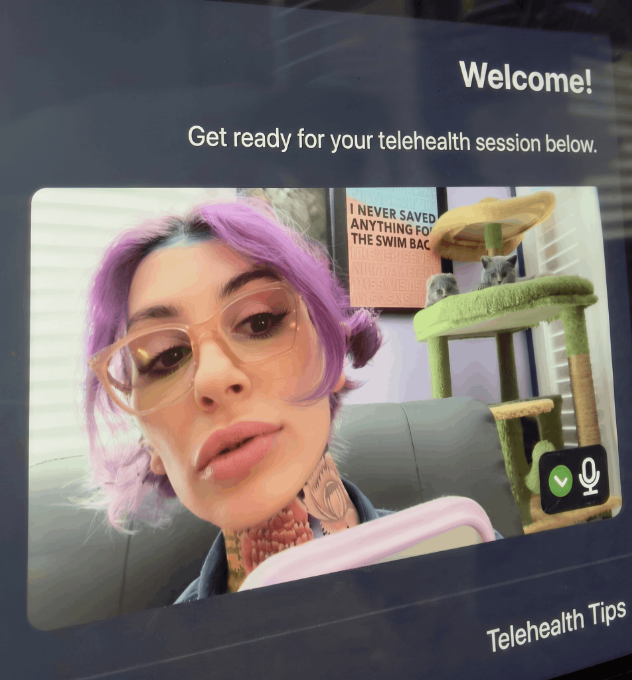
Your therapist
Mx. Love C. Dialogos, LMFT
Licensed Marriage and Family Therapist (LMFT)
AAMFT Clinical Fellow & Approved Supervisor · Pronouns: They/Them
Some of what I bring to this work is clinical training. Some of it is lived experience: including my own history of surviving physical, sexual, and emotional abuse, and my own survival of a suicide attempt. I don't lead with these things, but I don't hide them either, because I think it matters that the person helping you through the worst chapters of your life has walked through some of their own.
Licensed in: Wisconsin · Illinois · New York · Texas · Florida · Arizona · Ohio · Michigan · Indiana · New Mexico · Hawaii · Idaho · Alaska
Queer-Owned · Womxn-Owned · Disabled-Owned · Autistic-Owned · Neurodivergent-Owned
LGBTQ+ Therapist · Sex-Positive Therapist
Neurodiversity
Neurodivergent-affirming therapy
Specialised care for autistic adults, ADHDers, and AuDHD individuals: from a therapist who is neurodivergent themselves.
Telehealth: 13 states
Licensed where you are
All sessions are via HIPAA-compliant telehealth. Select your state for licensing details.
Google Reviews
What clients say
Jibbers C.
March 2026
"I've felt comfortable and understood with Love, yet challenged to work on 'assignments' (my word). Therapy is supposed to be work, I think. I have my 'eccentricities' that I've always felt uncomfortable talking about, and I feel relieved that I can talk openly and feel validated, welcomed, and unjudged. Learning I'm autistic was a shock, and I am immensely grateful my initial therapist sent me their way. She's helped me grieve who I thought I was, and figure out who I really am."
MaryJane N.
July 2025
"If you've struggled to find an affirming and compassionate therapist as someone who holds an oppressed or marginalized identity this is the place for you. The guidance and support myself and my child have received has been life changing."
Briar H.
May 2025
"I have never felt more listened to and cared about in a therapy setting than I have at Love Psychotherapy. Cannot recommend them enough!"
Simon T.
February 2025
"Therapy for people who want to feel seen!"
Resources & Books
Take something with you
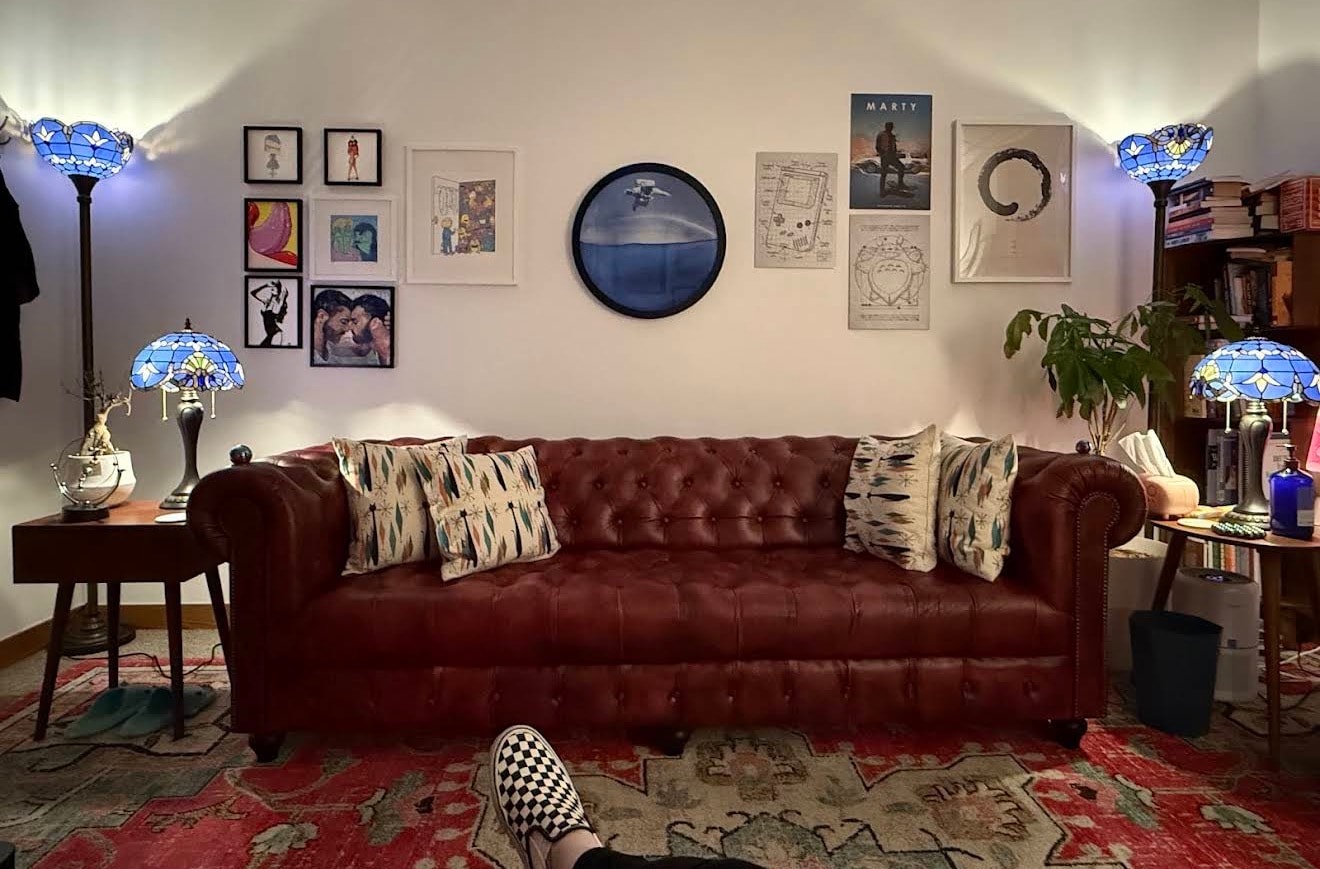
Ready to begin?
Watch the video to get a sense of who I am and how I work: then reach out when you're ready.
How I workA card on file is required. Appointments booked without a card on file will be canceled.